Celina deleted the roof-recover provisions from its code outright — every replacement comes off to the deck. It is also the fastest-growing city in the United States, at 24.6% in a single year.
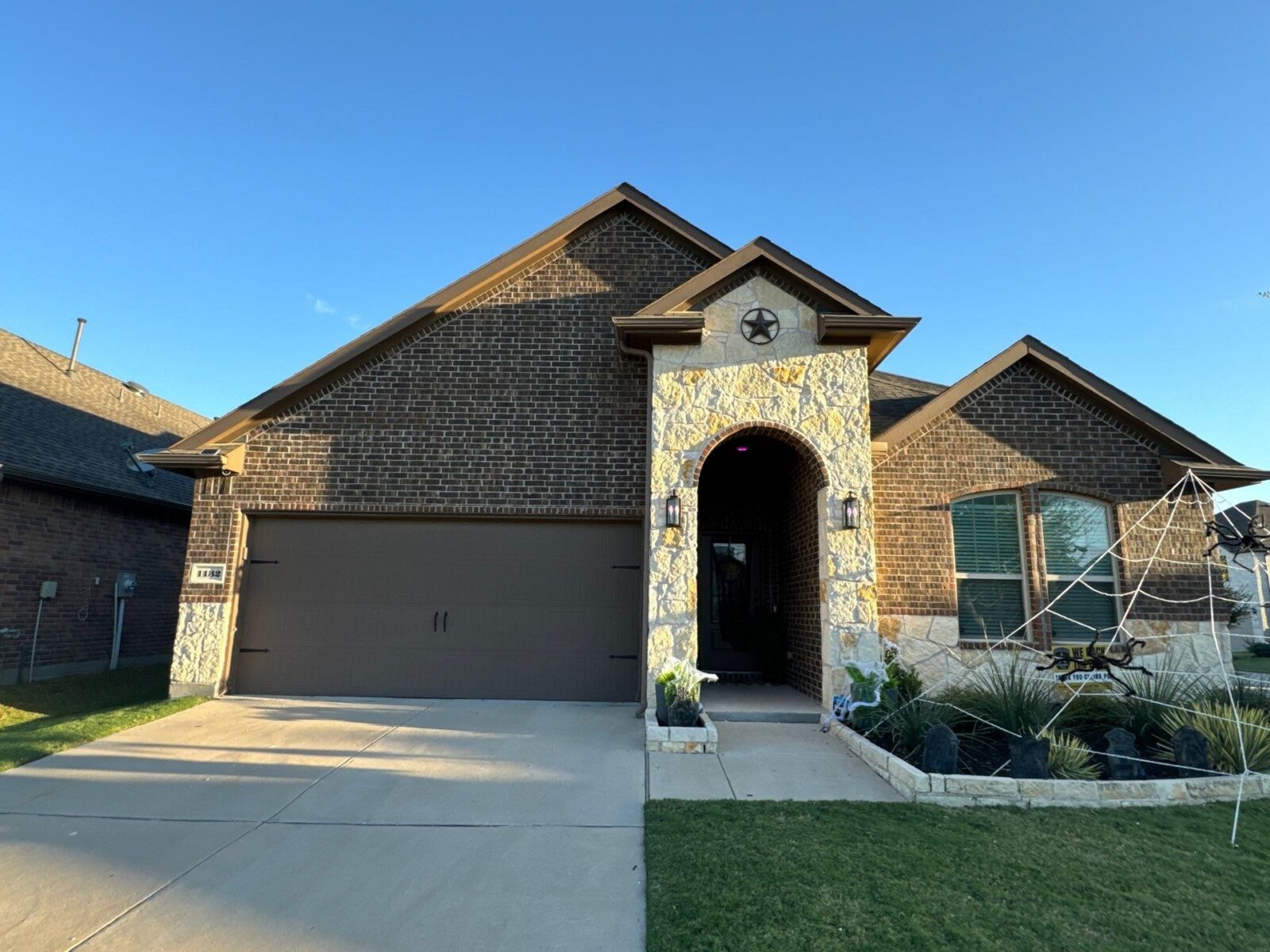
Celina bans layovers, and it did it in the bluntest language of any city we work. Ordinance 2022-103 amends IRC Section R908.3 to read that roof replacement shall include the removal of all existing layers of roof coverings down to the roof deck, and then deletes Sections R908.3.1, R908.3.1.1 and R908.4 in their entirety. Those are the provisions that allow a roof recover. Celina struck them. Southlake and Bedford, both of which we also serve, still permit a recover under unamended code. Here there is no such thing. Every replacement comes off to the deck, and if a bid on your table offers to go over the existing shingles, it was not written for this town.
The second thing to know is the pitch. Celina's zoning ordinance sets a minimum roof pitch of 6:12 for residential structures, which is steeper than the 4:12 most production builders default to. That affects labor, material waste, and how a roof gets walked. One honest caveat: the same ordinance says 4:12 minimum inside the Dallas North Tollway Overlay District, so the number depends on where your house sits. Two figures, one document. We check which one applies to your address.
Then there is the growth, and this is not a marketing line. The Census Bureau's own release of May 14, 2026 ranks Celina as the fastest-growing city in the United States among cities of 20,000 or more, at 24.6 percent in a single year. The estimates run 17,099 at the 2020 base to 64,427 in 2025 — up 277 percent in five years. In 2000 this town had 1,861 people. That growth defines the roofing market completely: median year built here is 2015, two thirds of the housing stock went up in 2010 or later, and 96.9 percent of it is single-family detached. Almost every roof in Celina is still the builder's original covering, which means the question is virtually never whether a roof wore out. It is whether a storm damaged a young roof, and whether it was documented properly at the time.
The storms are fewer in count and heavier in consequence than the numbers suggest. Nineteen hail reports within five miles since 2010 sounds light until you notice that four of them were two inches or larger, because this is rural country with fewer spotters to file reports, not calmer weather. The largest stone landed half a mile from the center of town on April 6, 2018 at three inches, with significant vehicle damage reported. April 21, 2017 brought four large-hail reports around town in one afternoon, including two-and-a-half-inch hail between Prosper and Celina. April alone accounts for 53 percent of Celina's hail.
The wind and tornado record is the serious half. On the night of May 25, 2024 an intense satellite tornado hit homes along Prairie Meadow Lane just north of Celina, and the NWS survey found at least two residences with moderate to high-end EF3 damage, estimated maximum winds of 165 mph, roofs and walls destroyed, with several more homes taking EF2 or EF1 damage on the same street. Property damage logged at $1.2 million. A second tornado the same night ran more than eight miles along the county roads south of Weston. More recently, on September 5, 2025, the remnants of Tropical Storm Lorena helped produce storms that blew much of the western portion of the Bethel Baptist Church roof off on County Road 128, and partially tore the roof covering and wood boards off the side of a house in North Preston Lakes.
On the code itself, Celina adopted the 2021 International Residential Code by Ordinance 2022-103, with the regional design values: 115 mph three-second gust, 5 pound ground snow load, and ice barrier underlayment not required. Beyond the tear-off amendment, Celina made no local change to underlayment, drip edge, decking or fastening, so those run on unamended 2021 code.
Permits are $100 for a roof or roof repair, with no square-footage or dollar threshold exempting a small repair — the fee line literally reads roof and roof repair together. Commercial re-roof is $100 per building. Contractor registration is $100 and there is a quirk worth knowing: Celina's registration form has no roofing category at all, so a roofer registers as a general contractor. Registration expires at the same date as the Texas state trade license or 365 days from registration, whichever comes first, it is non-transferable, and fees are not prorated. Permits will not be issued and inspections will not be performed for anyone without a current registration.
One last thing that catches downtown homeowners. Any change to a property or structure within the Downtown Code district requires a Certificate of Appropriateness, and the ordinance is explicit that a Certificate of Appropriateness may also be required for work not otherwise requiring a building permit. The Downtown Code permits pitched hip or gable roofs and prohibits flat and mansard, and asks that roofs reflect the Historic Texas Style in neutral and earth tone colors. If your address is downtown, that review comes before anything else.
We will also flag one genuine ambiguity rather than pretend it is settled. Celina's zoning says no more than one color shall be used for visible roof surfaces and that the primary roof shall not be a bold color — but a later subsection narrows exterior color enforcement to non-residential buildings, and another states outright that the enhanced roofing requirement does not apply to residential buildings. Whether a Celina homeowner's shingle color is actually regulated is unclear on the face of the ordinance. We ask the city for your specific address rather than guessing.
Repairs, replacements, installations, and inspections for homeowners. Class 4 impact-resistant shingles, metal, tile, slate.
View Residential Roofing →TPO, EPDM, modified bitumen, and metal systems for businesses and property managers. Maintenance plans available.
View Commercial Roofing →Emergency and scheduled repairs. Hail damage, leaks, flashing, and storm response with 1-year workmanship warranty.
View Roof Repair →Full tear-off and replacement with manufacturer warranties up to 50 years. Flexible financing available.
View Roof Replacement →Honest, no-pressure assessments for storm damage, pre-sale, and annual maintenance — written report included.
View Free Roof Inspection →Residential maintenance plans from $24.99/month. Annual inspection, priority scheduling, 10% repair discount.
View Roof Maintenance →Ordinance 2022-103 rewrote R908.3 to require removal of all existing layers down to the roof deck, and deleted the recover provisions entirely. There is no second layer permitted in this town at any thickness, and the code does not offer an exception to argue about. A bid that offers to go over your existing shingles here was written for a different city. We price a full tear-off because that is the only legal scope.
Celina's zoning sets a 6:12 minimum roof pitch for residential structures, but the Dallas North Tollway Overlay District section of the same ordinance sets 4:12. Two numbers, one document, and which one governs depends on where your house sits. A steeper roof changes staging, waste factor and labor, so it belongs in the estimate rather than as a surprise. We confirm before we quote.
On May 25, 2024 an EF3 satellite tornado destroyed roofs and walls on Prairie Meadow Lane just north of town, with surveyed winds of 165 mph and more homes on the same street taking EF2 and EF1 damage. In September 2025 wind took much of a church roof off on CR 128 and tore roof covering off a house in North Preston Lakes. Out here the priorities are fastening pattern, starter course, edge metal and ridge sealing, not impact ratings.
Don't see your question? Call us at (469) 936-7663 — we're happy to talk it through.
No. Celina amended IRC R908.3 to state that roof replacement shall include the removal of all existing layers of roof coverings down to the roof deck, and it deleted sections R908.3.1, R908.3.1.1 and R908.4 in their entirety — those are the provisions that would otherwise permit a recover. Southlake and Bedford still allow layovers under unamended code. Celina does not, at all.
Six in twelve for residential structures under the zoning ordinance, which is steeper than the 4:12 many builders default to. But the same ordinance sets a 4:12 minimum inside the Dallas North Tollway Overlay District, so the governing number depends on your location. We confirm which applies to your address before writing a scope, because pitch changes how a roof is staged and how much material it takes.
One hundred dollars, and the fee line reads roof and roof repair together, so there is no square-footage or dollar threshold that exempts a small repair. Commercial re-roof is $100 per building. Contractor registration is another $100 a year. Reinspection is $100 per failed inspection after the second one, so the first two failures are free and the third gets expensive.
It can, and in Celina that is the normal situation rather than the exception. Median year built here is 2015 and two thirds of the housing stock went up in 2010 or later, so almost every roof in town is still the builder's original covering. The real question is not wear, it is whether a specific storm damaged a young roof — and that turns entirely on documentation at the time of loss. We photograph and date everything.
Honestly, the ordinance is unclear and we would rather say so. The zoning says no more than one color shall be used for visible roof surfaces and that the primary roof shall not be a bold color. But a later subsection narrows exterior color enforcement to non-residential buildings, and another section states the enhanced roofing requirement does not apply to residential buildings. Those provisions sit in the same document. We ask the city about your specific address rather than guessing in either direction.
Yes. Any change to a property or structure within the Downtown Code district requires a Certificate of Appropriateness, and the ordinance says a Certificate of Appropriateness may also be required for work that would not otherwise need a building permit at all. The Downtown Code permits pitched hip and gable roofs, prohibits flat and mansard, and asks for the Historic Texas Style in neutral and earth tone colors. That review happens first.
Fewer reports, not necessarily less hail. Nineteen reports within five miles since 2010 against 83 for Bedford — but this is rural country with far fewer spotters filing reports, and four of Celina's nineteen were two inches or larger. A three-inch stone landed half a mile from the center of town on April 6, 2018. April alone accounts for 53 percent of the hail here. Low report counts are about who is watching, not about what falls.
Call us at (469) 936-7663, or request your free estimate online — most inspections are scheduled within 24–48 hours.
(469) 936-7663