A thousand pre-war homes under Certificate of Appropriateness rules, and six thousand newer ones that just need the permit filed right. We know which one you are.
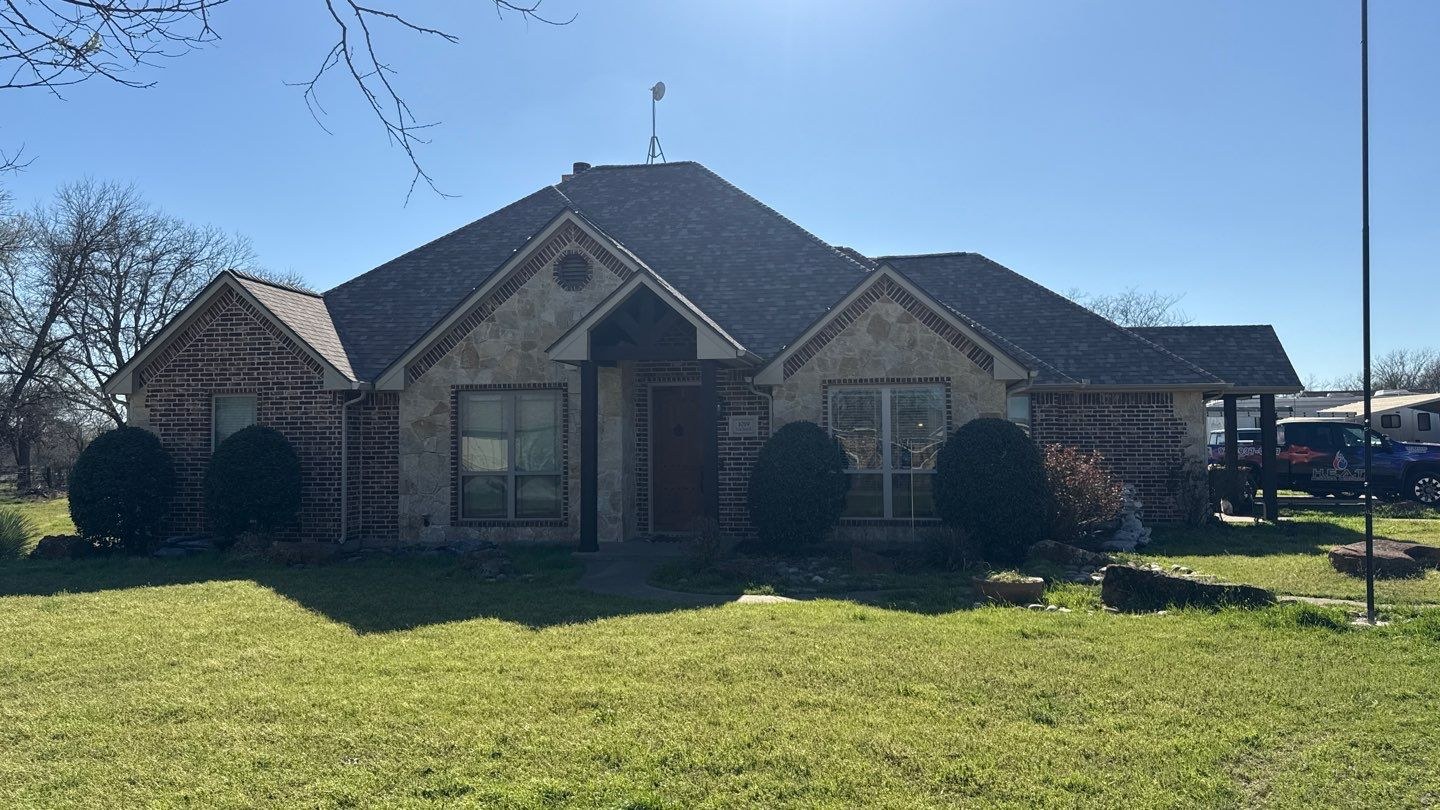
Waxahachie is two housing markets wearing one city’s name, and a roofing estimate that ignores which one you live in is going to be wrong. The median home here was built in 2004. At the same time, 1,092 houses — 6.5% of every dwelling in the city — were built in 1939 or earlier, and nearly 15% predate 1960. At the other end, 39% of the city has gone up since 2010. A pre-war house on the courthouse square and a 2016 subdivision house three miles out are governed by different approval tracks, need different materials, and should not get the same quote.
That 1,092-home figure is the hard number underneath the “Gingerbread City” nickname, and it is exactly the segment where Waxahachie’s most important roofing rule applies. Under Section 24-56, any alteration to a building inside a historic overlay district, a historic district, on the National Register, or designated a Texas Historic Landmark requires a Certificate of Appropriateness from the Heritage Preservation Commission. The city’s own wording carries the exception that matters: a Certificate of Appropriateness “excludes Minor-In-Kind Repairs.” In practice, replacing a historic roof like for like generally moves as an ordinary permit. Changing the material or the profile can send you to the commission. Homeowners get this backwards constantly, usually after they have already picked a shingle.
We will be straight about the limit of our knowledge here: Waxahachie’s 2021 Residential Design Guidelines and its 2011 Downtown Design Guidelines are not published online — the city provides them by email on request. We are not going to tell you what colors or profiles those documents permit, because we are not going to guess at a rule that determines whether your project gets approved. If you are inside a district, that conversation starts with Historic Preservation staff at 469-309-4111, and we are happy to be on the call.
Outside the districts, the process has its own quirk worth knowing. Waxahachie’s residential remodel checklist says a remodel is work on an existing home without adding square footage, and then adds: “This does not include single trade repairs such as reroofing.” A re-roof is not a remodel permit in this city. It runs as a single-trade repair on its own track, and a contractor who files it the other way has used the wrong permit type and will lose time to it.
On weather, Waxahachie’s reputation undersells the wind and oversells nothing about the hail. Sixty-one hail days within ten miles since 2000, but only two days at baseball size or larger — fewer giant-hail days than northeast Tarrant County by a wide margin. The largest stone on record is a 3.75-inch measurement made by a trained spotter on June 14, 2023, just over two miles from the city center. Grapefruit size, measured rather than estimated.
The wind record is more pointed. On April 11, 2011 an NWS survey confirmed straight-line winds around 80 mph in town and wrote that “a warehouse on the south side of town lost most of its roof” and “an apartment complex on Franklin Street sustained partial roof loss,” with further roof damage at the Comfort Suites near I-35E and Highway 287. Ten years later, on May 3, 2021, an EF2 tornado 659 yards wide — better than a third of a mile — tracked five and a half miles from the Five Points area along FM 876, across I-35E, through homes near Highway 77 and Butler Lane, and on to FM 55. Eight people were injured. And in one of the more unusual records in this county, on the evening of July 9, 2012 the Waxahachie Fire Department reported five houses struck by lightning in a single evening, four of which caught fire, with damage itemized house by house up to $80,000.
One more number shapes how we work here. Owner-occupancy in Waxahachie is 60.3%, against roughly 78-80% in Watauga and Midlothian, and there are 6,327 renter-occupied units in the city. A large share of the roofs in Waxahachie are decided by a landlord or a property manager rather than the person living under them. We do a lot of that work, we understand the difference between a turn budget and a twenty-year decision, and we will tell you plainly which one a given roof needs.
Repairs, replacements, installations, and inspections for homeowners. Class 4 impact-resistant shingles, metal, tile, slate.
View Residential Roofing →TPO, EPDM, modified bitumen, and metal systems for businesses and property managers. Maintenance plans available.
View Commercial Roofing →Emergency and scheduled repairs. Hail damage, leaks, flashing, and storm response with 1-year workmanship warranty.
View Roof Repair →Full tear-off and replacement with manufacturer warranties up to 50 years. Flexible financing available.
View Roof Replacement →Honest, no-pressure assessments for storm damage, pre-sale, and annual maintenance - written report included.
View Free Roof Inspection →Residential maintenance plans from $24.99/month. Annual inspection, priority scheduling, 10% repair discount.
View Roof Maintenance →Inside a historic overlay or district, Section 24-56 makes a re-roof an alteration requiring a COA — unless it qualifies as a Minor-In-Kind Repair. Like-for-like usually does. A change of material or profile usually does not. We raise this at the estimate, not after the order is placed, and we will not tell you what the city’s design guidelines say without having read the copy the city sends out.
Waxahachie’s own submittal guide excludes reroofing from the residential remodel permit in as many words. Filed correctly the first time, through the city’s online CSS portal, a re-roof does not get bounced back for being on the wrong checklist. Small thing; it costs people a week.
Waxahachie is the only city in this part of Ellis County that publishes an insurance floor: a $300,000 minimum liability policy, with the City of Waxahachie listed as the certificate holder. That certificate-holder requirement is specific and an out-of-town storm crew will miss it. Registration also runs one calendar year from the application date rather than to a fixed date, so it expires on its own schedule.
Don't see your question? Call us at (469) 936-7663 — we're happy to talk it through.
We are not going to quote you a number we could not verify. Waxahachie’s fees live in Chapter 11, Section 11-1 of the Code of Ordinances, which is not readable through the city’s online code library without an account, and the figure does not appear in the published budget. Call Building and Community Services at 469-309-4020 for the current amount, or we will confirm it when we pull your permit. What is certain is that a permit is required.
Probably, and it depends entirely on whether you are replacing like with like. Section 24-56 requires a Certificate of Appropriateness for alteration of any building in a historic overlay district, a historic district, on the National Register, or designated a Texas Historic Landmark — but the city states that a COA “excludes Minor-In-Kind Repairs.” Same material, same profile, same appearance generally stays out of commission review. A change of material generally does not. Start with Historic Preservation at 469-309-4111 before you commit to a product.
We do not know, and neither does any website telling you confidently. The Waxahachie Residential Design Guidelines from 2021 and the Downtown Design Guidelines from 2011 are only distributed by request from city staff, so the specific material and profile rules are not public. Anyone quoting them to you off a web page is repeating something they have not read. Get the documents from the city, and we will build to whatever they say.
Yes, and there is a wrinkle. Registration requires a master or state license, the owner’s driver’s license, and proof of a liability policy of at least $300,000 naming the City of Waxahachie as certificate holder. The registration expires one calendar year after the application date. Note that the city’s contractor type checkboxes are General, Mechanical, Electrical, Plumbing, Irrigation, Backflow Tester, Fire Alarm and Fire Sprinkler — there is no roofing category, so roofers register as General. Also worth saying plainly: Texas does not license roofing contractors at the state level, so no one has a state roofing license to show you.
Waxahachie passed Ordinance 3505 on May 20, 2024, adopting the 2021 International Codes and the 2020 National Electrical Code effective June 1, 2024, with the NCTCOG regional amendments. Those amendments do not touch Section R908, which governs re-covering and when a full tear-off is required, so the standard 2021 IRC rules apply with no local modification. The single roofing amendment Waxahachie does adopt is R902.1, making Class A, B or C fire-rated roofing mandatory on dwellings, with an exception only for small detached sheds and playhouses.
Not because the code requires it, because it does not. The adopted Table R301.2(1) for Waxahachie lists ice barrier underlayment as NOT required, a 115 mph 3-second gust design wind, no special wind region and no windborne debris zone. If a bid presents ice-and-water shield across your eaves as a code requirement, that is a sales line rather than a code line in this city. There are perfectly good reasons to use it in valleys and around penetrations, and we will explain those — but we are not going to sell it to you as something the inspector demands.
Middling on frequency, low on the truly giant stones. Sixty-one hail days within ten miles since 2000 — the same as Midlothian and about half of what northeast Tarrant County records — but only two of those days produced hail at baseball size or larger, against nine days up in Watauga. The biggest documented stone is 3.75 inches, measured by a trained spotter on June 14, 2023 about two miles from the center of town. Wind and tornado are the sharper risks here.
Yes. On May 3, 2021 an EF2 tracked 5.43 miles with a damage path 659 yards wide, starting in the Five Points area along FM 876, crossing I-35E where it struck three semis and a cargo van, damaging homes and electrical towers near Highway 77 and Butler Lane, and continuing to FM 55. Maximum estimated winds were 120 mph and eight people were injured. A smaller point worth making: on May 19, 2015 an EF0 east of town damaged as many as twenty homes, and the NWS noted that only one suffered more than shingle damage. Even weak tornadoes here mean roof claims.
We could not verify them. The city’s noise rules sit in Chapter 20 of the Code of Ordinances, which we were unable to retrieve, and we are not going to assume Waxahachie matches Midlothian’s 7:00 a.m. ordinance just because it is next door. We will confirm with the city when we permit your job and work to whatever the actual rule is.
Regularly. Waxahachie has more than six thousand renter-occupied units and the lowest owner-occupancy rate of the cities we serve at this distance, so a large share of the roofs here are managed assets. We will give you a straight repair-or-replace assessment with numbers on both options, work around tenant access, and document everything for your files.
Call us at (469) 936-7663, or request your free estimate online — most inspections are scheduled within 24–48 hours.
(469) 936-7663