No zoning does not mean no permit. Houston requires one above a single roofing square — with plan review, inspection, and a wind figure the city refuses to publish.
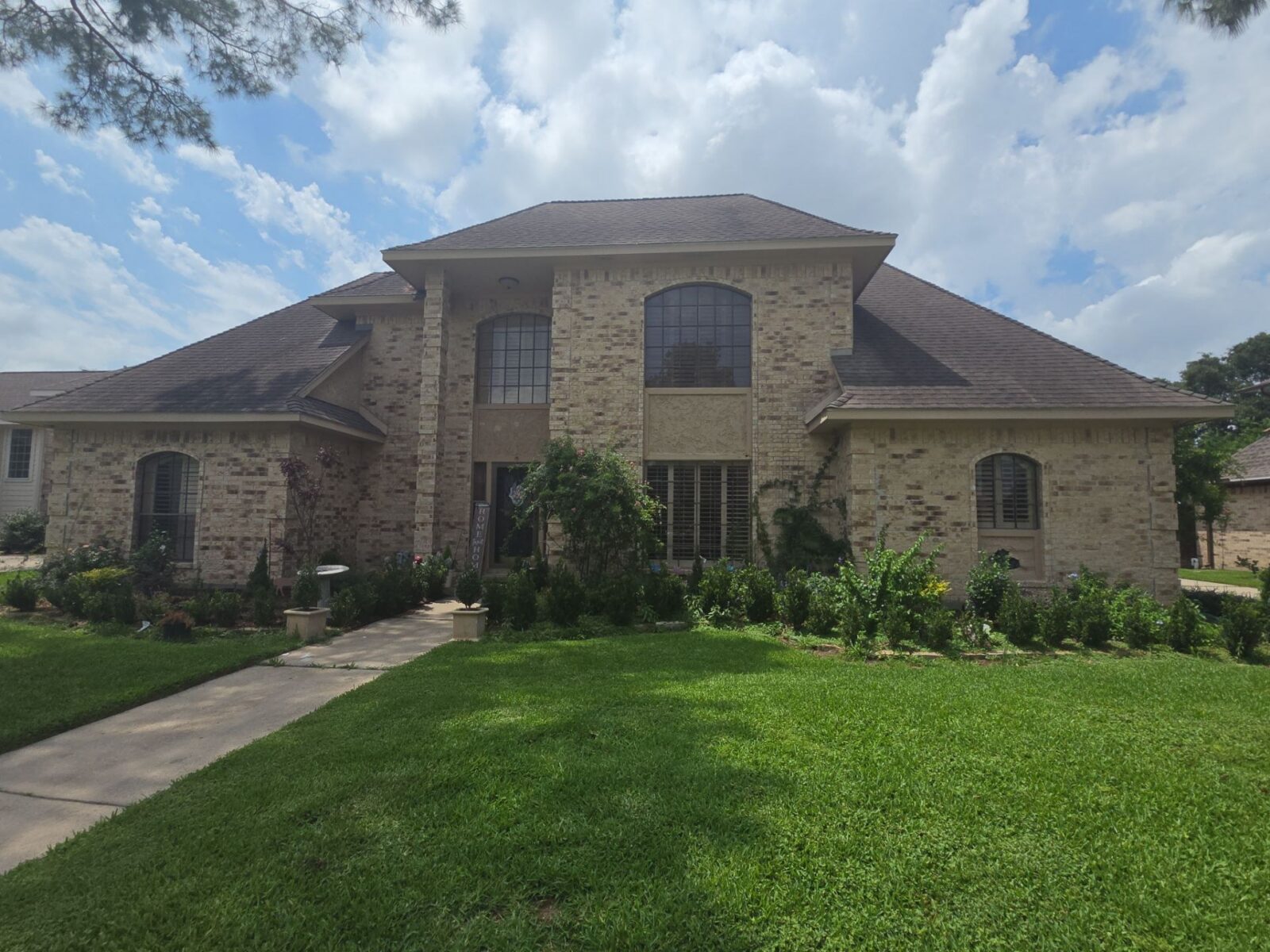
Houston has no zoning ordinance. Almost everyone knows that, and almost everyone draws the wrong conclusion from it.
No zoning does not mean no permit. Houston's Residential Code exempts “roof covering that does not exceed an aggregate of 100 square feet” — one square. Anything larger requires a permit, and the Houston Permitting Center's own record for the residential roofing permit states that plan review is required and inspection is required. No zoning does not mean no building code either: Houston adopted its Residential Code by Ordinance 2023-9071, effective January 1, 2024. What the absence of zoning changes is what you may build and where. It does not remove the permit, the plan review or the inspection on your roof.
The second thing Houston does differently is more interesting, and we have not seen another city do it. Houston publishes no design wind speed. Where every other Texas city we work in fills a number into the climate table — 115 mph across Dallas-Fort Worth, 105 in Austin and Abilene — Houston's table says “See Footnote n,” and that footnote requires a per-address ASCE 7 wind hazard lookup at Risk Category II, printed out and attached to the plans. Houston is large enough and its wind exposure varies enough across the city that it refuses to publish one figure. So if a contractor quotes you a Houston design wind speed off the top of their head, they are quoting something the city has declined to state.
Houston is also, despite what a lot of coastal roofing marketing implies, outside the Texas Department of Insurance designated catastrophe area. The rule at 28 TAC 5.4008 brings in Harris County only for areas east of State Highway 146 and inside the city limits of Seabrook, La Porte, Shoreacres, Pasadena and Morgan's Point. Houston is not on that list. If you are being told you need a windstorm certificate of compliance for a re-roof in Houston proper, that is a Pearland or Galveston County requirement being applied to the wrong address.
The housing here is old and there is a great deal of it. Houston has 1,040,576 housing units with a median year built of 1982, making the median Houston home forty-four years old. Sixty percent of the city's housing was built in 1989 or earlier, and 83% in 2009 or earlier. Only 30% postdates 2000. That is an enormous replacement market, and it is why we are in this city at all.
The storm record is dominated by wind rather than hail, which runs against the North Texas pattern. Since 2000 there have been 140 distinct damaging-wind days within ten miles against 85 hail days, plus 24 tornado tracks. The defining recent event is the derecho of May 16, 2024. The National Weather Service summary reads: “This resulted in extensive wind damage across much of the Greater Houston area, including much of Downtown Houston. Maximum wind gusts were estimated to have reached over 100 mph.” Numerous skyscraper windows across downtown were blown out. Nine people died. Power was out for days for hundreds of thousands.
One honest note about data, because it affects what we can and cannot tell you. Hurricane Beryl hit Houston in July 2024, and it is absent from the federal storm database — there are zero records for the entire month of July 2024 in this forecast office's file. That is a gap in the database, not evidence that nothing happened. Any page citing NOAA figures for Beryl in Houston is citing something that does not exist. We work from what we can source and we say when we cannot.
Finally, the rule that shows up on every invoice. Houston Solid Waste is explicit: “Contractor debris: Not collected. Material generated by contractors (tree removal, construction, roofing, remodeling, etc.) must be removed by the contractor.” Roofing materials and shingles appear by name on the not-accepted list. Even resident-generated building material, which the city will take up to four cubic yards of, excludes shingles specifically. Your tear-off is the contractor's problem, by ordinance.
Repairs, replacements, installations, and inspections for homeowners. Class 4 impact-resistant shingles, metal, tile, slate.
View Residential Roofing →TPO, EPDM, modified bitumen, and metal systems for businesses and property managers. Maintenance plans available.
View Commercial Roofing →Emergency and scheduled repairs. Hail damage, leaks, flashing, and storm response with 1-year workmanship warranty.
View Roof Repair →Full tear-off and replacement with manufacturer warranties up to 50 years. Flexible financing available.
View Roof Replacement →Honest, no-pressure assessments for storm damage, pre-sale, and annual maintenance - written report included.
View Free Roof Inspection →Residential maintenance plans from $24.99/month. Annual inspection, priority scheduling, 10% repair discount.
View Roof Maintenance →A Houston re-roof over 100 square feet needs a permit, plan review and inspection. The permit runs through iPermits and requires either form CE-1104 for an overlay or the CE-1109 residential re-roof worksheet, and the permit and worksheet must be on site for the inspection. Unpermitted work carries an investigation fee of $333.42 minimum or double the fee, whichever is greater. Processing takes ten business days, which is why we file before we schedule you.
Houston's climate table does not publish a design wind speed. It points to a footnote requiring an ASCE 7 wind hazard result for your specific address at Risk Category II, attached to the plans. That is more work than reading a number off a table, and it is the correct answer for a city this large. Anyone quoting you a single Houston wind figure is quoting something the city deliberately declined to state.
Houston Solid Waste lists “roofing materials or shingles” among items not accepted, and states that contractor-generated construction debris “must be removed by the contractor.” Even the four-cubic-yard allowance for resident-generated building material excludes shingles by name. Disposal is inside our price and it is not negotiable under the ordinance.
Don't see your question? Call us at (469) 936-7663 — we're happy to talk it through.
Yes, for almost any real roofing job. Houston's Residential Code exempts roof covering work only up to an aggregate of 100 square feet — a single roofing square. Above that, the Houston Permitting Center requires a permit with both plan review and inspection. The two ideas get conflated constantly: no zoning governs what may be built where, and has nothing to do with whether your roof needs a permit. Houston also has a full Construction Code, adopted by ordinance and effective January 1, 2024.
There is no flat re-roof line item, so we will not quote you one figure. What the published schedule does establish: a $33.56 administrative fee, a minimum building code enforcement permit fee of $91.06, and a plan review fee of 25% of the estimated permit fee, with residential permit fees computed from the city's valuation tables by construction type and square footage. Fees rose 1.391% on January 1, 2026 under the city's CPI policy. We calculate it for your specific job rather than guessing.
Houston does not publish one, and that is a deliberate choice rather than an oversight. The city's climate criteria table refers to a footnote requiring an ASCE 7 wind hazard tool result for the specific address, at Risk Category II, submitted with the plans. Contrast Dallas-Fort Worth, where every city publishes 115 mph, or Austin at 105. If you want the number for your address, it comes from running the lookup, and we do that as part of the permit package.
Almost certainly not. The TDI rule that creates the designated catastrophe area brings in Harris County only for areas east of State Highway 146 and inside the city limits of Seabrook, La Porte, Shoreacres, Pasadena and Morgan's Point. Houston is not among them, and neither is Fort Bend County. Where it does apply — parts of Pearland on the Brazoria County side, for instance — the rules now expressly name reroofing, and a WPI-8 certificate matters for TWIA insurance eligibility rather than for the permit. We will tell you which side of that line your address is on.
Houston runs a voluntary roofing contractor registration programme and maintains a public list of registered roofing contractors — but we want to be careful here, because we could not read the city's own source document directly in our research and we are not going to publish requirements we verified only second-hand. What is certain: Texas has no statewide roofing contractor licence, and Houston's own fee schedule contains no mandatory roofing licence line. Ask any contractor for their certificate of insurance and check the limits yourself rather than relying on a registry.
Houston's noise ordinance handles this as a defense rather than a curfew, and both halves matter. Section 30-16 protects construction noise made between 7:00 a.m. and 8:00 p.m. only if it does not exceed 85 dB(A) measured at the property line of the residential property receiving it. Outside those hours, or above that level, the defense does not apply and the maximum citation is $2,000. In practice we work daylight hours and keep compressors away from the property line.
Wind, clearly. Since 2000 there have been 140 distinct damaging-wind days within ten miles of the city against 85 hail days, plus 24 tornado tracks. The defining event is the May 16, 2024 derecho, which the National Weather Service described as producing estimated gusts over 100 mph across Greater Houston, blowing out numerous skyscraper windows downtown and killing nine people. That is a different risk profile from North Texas, where hail drives most claims, and it changes what we recommend: wind rating and fastening over impact rating.
Because it is not there. The federal storm events database contains zero records for the entire month of July 2024 in the Houston/Galveston forecast office's file — we verified that three ways. Beryl unquestionably happened and unquestionably did damage; the database simply has a gap. We would rather tell you that than quote you a number we cannot source, and you should treat any page presenting NOAA figures for Beryl in Houston with suspicion.
We do, and the city is unusually direct about it. Houston Solid Waste's heavy trash guidance states that contractor debris is not collected and that material generated by contractors from roofing and similar work must be removed by the contractor. Roofing materials and shingles appear by name under items not accepted. The city will take up to four cubic yards of resident-generated building material, and that allowance explicitly excludes shingles. So there is no route by which your tear-off becomes the city's problem.
Right at the median. Houston's median year built is 1982, which makes the typical house here forty-four years old, and 60% of the city's million-plus housing units were built in 1989 or earlier. A house of that age in this climate has usually been through two roofs and several named storms. What we look at first is the decking and the fastening, because a roof that survived the 2024 derecho without losing shingles may still have loosened at the edges — and edge failure is how the next one starts.
Call us at (469) 936-7663, or request your free estimate online — most inspections are scheduled within 24–48 hours.
(469) 936-7663