
HVAC Roof Flashing Contractor — North Texas
The roofer DFW HVAC contractors call when a job touches the roof.
Why HVAC Installations Need a Dedicated Roofer
HVAC contractors are experts in mechanical systems — not roofing. When a rooftop unit is installed or replaced, the curb penetrates the roof membrane and creates an opening that must be properly flashed, counter-flashed, and sealed to prevent water infiltration.
Done wrong, or left to caulk and sealant alone, these penetrations are among the most common sources of commercial roof leaks. TPO, EPDM, modified bitumen, and metal roofs each require a different approach — a tube of sealant is not a long-term solution.
Industry guidelines from SMACNA outline the proper installation standards for HVAC equipment on commercial roofs. That’s why partnering with a qualified HVAC roof flashing contractor in North Texas is the professional standard.
HVAC Flashing Services We Provide
Full roofing scope for every HVAC installation, replacement, or service call in DFW and North Texas.
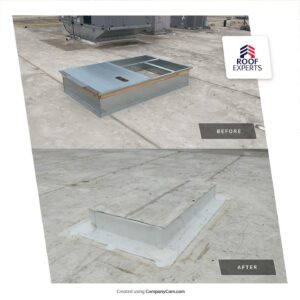
Curb Flashing
New curb flashing and re-flashing of failed curbs. Heat-welded or mechanically fastened to match your roof system.
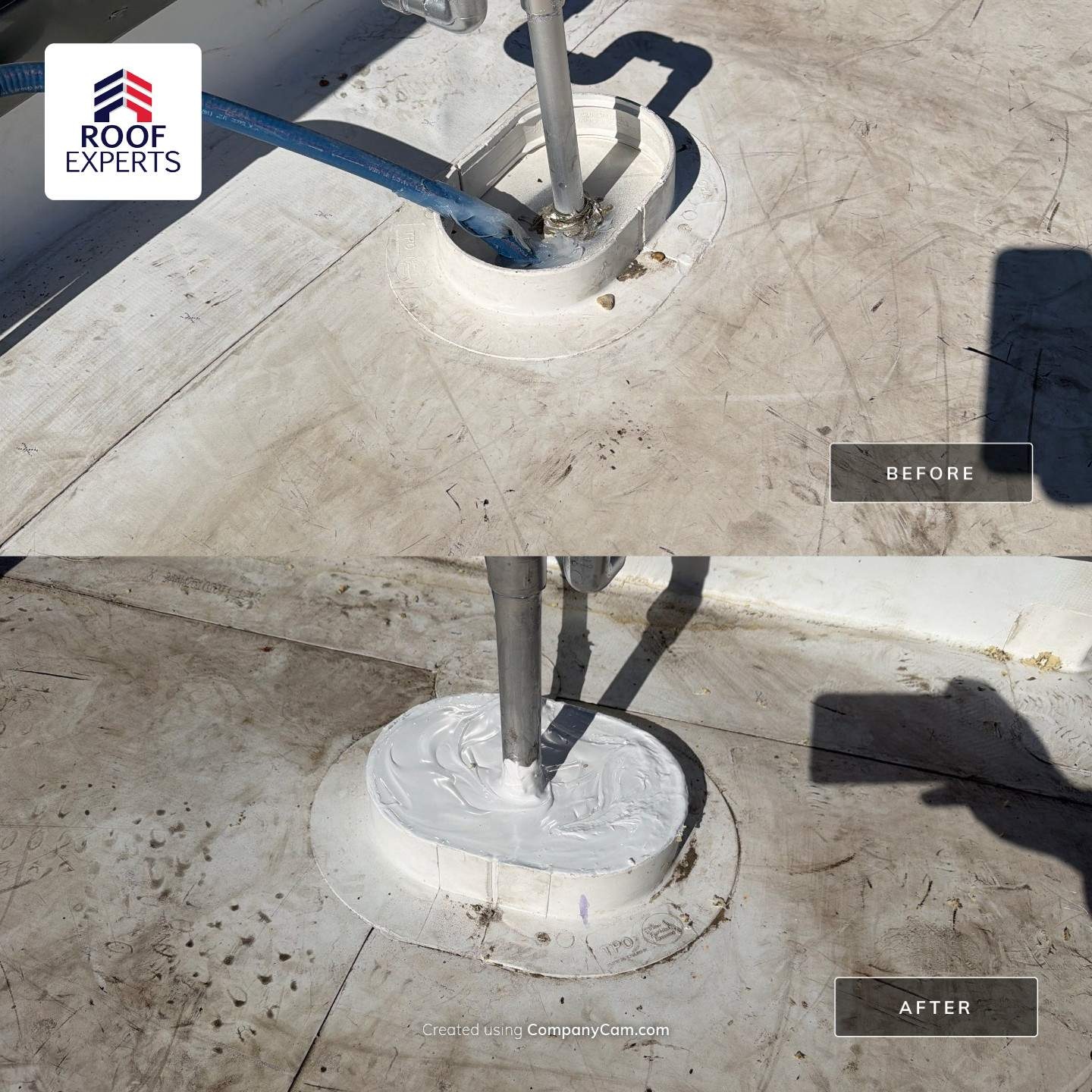
Line Set & Pipe Penetrations
Refrigerant lines, condensate lines, and conduit penetrations properly flashed and sealed for long-term performance.
Pitch Pan Installation
For irregular penetrations where standard boots won’t work — installed, filled, and waterproofed to stop water intrusion.
Walk Pads & Inspections
Membrane-protecting walk pads plus photo-documented post-install inspections — a clear record for you and your customer.
Why Choose Roof Experts as Your HVAC Roof Flashing Contractor
- Same-day coordination — On site the day the unit goes in, or follow behind to flash and seal after mechanical work.
- Photo documentation — Every job documented with before/after photos and a written warranty.
- Fully insured — Full general liability and workers’ comp. Your customer is protected.
- All roof systems — TPO, EPDM, modified bitumen, built-up, and metal. We flash them all correctly.
- Referral relationships — Set up a standing account so you always have a roofer ready when a job touches the roof.
- 2-year workmanship warranty — Every new flashing installation is backed by a 2-year warranty on our workmanship. Covers the flashing we install, not pre-existing roof conditions.
HVAC Flashing Pricing
Transparent, straightforward pricing. Final cost depends on roof type, accessibility, and scope.
| Service | Price Range | Notes |
|---|---|---|
| Curb Flashing | $50 – $70 per linear foot | Single unit curb, compatible with existing roof system. 2-year workmanship warranty. |
| Pitch Pans | $500 – $750 | Includes fill material and waterproofing. 2-year workmanship warranty. |
| Pipe & Line Set Penetrations | $500 – $800 | Per penetration, includes flashing and sealing. 2-year workmanship warranty. |
When HVAC flashing is part of a larger roofing project, these costs are typically incorporated into the overall scope. Contact us for a site-specific quote.
Serving North Texas & the DFW Metroplex
Licensed HVAC roof flashing contractor serving Dallas, Fort Worth, Frisco, McKinney, Plano, Garland, Arlington, and surrounding communities. Same-day and next-day response available.
Property Owner? Here’s What to Know
If you’ve had an HVAC unit installed or replaced recently and you’re now seeing water stains on your ceiling, pooling water near the unit, or signs of moisture in your attic or roof deck — there’s a good chance the flashing wasn’t done correctly.
This is one of the most common and most preventable causes of roof leaks in North Texas. Roof Experts provides free inspections to assess HVAC-related flashing failures, document the damage, and give you a clear scope of repair.
If the leak is traceable to faulty installation work, we can provide documentation to support a warranty or liability claim against the installing contractor.
Common HVAC Roof Flashing Failures We See in North Texas
Most HVAC roof leaks aren’t random — they follow predictable patterns. Here’s what our HVAC roof flashing contractor team finds most often on DFW commercial roofs.
Curb Separation on TPO & EPDM Roofs
When HVAC units are installed without a licensed roofer, curb flashing is often left to caulk alone. North Texas heat cycles cause caulk to shrink and crack within 1–2 years, allowing water into the building every rain event.
Cracked or Overfilled Pitch Pans
Pitch pans around refrigerant line sets and conduit penetrations need proper fill material and a crowned top to shed water. We regularly see overfilled pans that trap water and underfilled ones that crack — both create HVAC-related roof leaks.
Failed Counter-Flashing After Unit Replacement
Replacing an HVAC unit often disturbs the existing counter-flashing. If the new unit footprint differs slightly, gaps open up at the base. As your dedicated HVAC roof flashing contractor, we re-flash every replacement — not just the new penetrations.